Early Communication, Toys

Using Puppets to support Speech & Language Development

Imitation Skills

Babies and toddlers generally copy actions before words. Encourage your child to imitate the following actions:

  • Giving the puppet a kiss/ hug
  • Brushing the puppet’s hair
  • Giving the puppet something to eat/drink
  • Getting the puppet to wave hi/bye
  • Giving the puppet a high five!

Symbolic Sounds

Symbolic sounds generally emerge before first words. Model the following sounds for your child and encourage them to imitate you:

  • Mwaaaah for kiss
  • Ooooh for the hug
  • Mmmmm for eating

First words

  • Practise pointing to or naming the different body parts
  • If the puppet has clothes, name the different clothing items
  • Practise saying hi and bye.

Pretend Play

Older children can continue to enjoy using puppets to develop their pretend play skills. Some of the benefits of pretend play include the following:

  • Vocabulary development
  • Concept development
  • Developing your child’s imagination
  • Problem solving skills
  • Turn-taking and sharing
  • Understanding a social situation
  • Developing theory of mind i.e. understanding others’ perspectives
Early Communication, Toys

Building Communication Skills with Bubbles

Bubbles can be used in a fun way to help encourage communication development. Follow the tips below and try them out for yourself.

Use bubbles to teach a word or sign

Blow bubbles for your child and encourage them to ask for ‘more’ or to blow the bubbles ‘again’. This may be through eye contact, gesture/sign, sounds or words.

Use bubbles to help develop phrases

If your child is starting to combine words, practise using phrases such as ‘more bubbles’, ‘more bubbles please’ etc.

Create an opportunity for your child to communicate

Tie the bubbles really tight and give them to your child. This will encourage your child to communicate with you that they need ‘help’. Again, this may be through eye contact, gesture, sounds or words. Model words/signs such as ‘open’, or ‘help’ for your child.

Use bubbles to teach a sound

As you pop the bubbles with your child say ‘pop, pop, pop, pop’ in a quiet voice. Encourage your child to imitate. The [p] sound is one of the first sounds to emerge in speech sound development.

Use bubbles to help develop eye contact

Blowing bubbles can encourage lots of eye contact as your child anticipates more. Wait for your child to make eye contact before blowing again.

Develop cause and effect

Children begin to learn that their actions caused the desired event through cause and effect toys and activities. This paves the way for higher level problem solving and reasoning skills. Children will enjoy using their fingers and hands to pop the bubbles!

Use bubbles to teach simple language concepts

Model the following concepts as you have fun together:

  • Big Bubble
  • Small Bubble
  • Up high
  • Down low
Toys

Toy Recommendations

The importance of play in early childhood cannot be underestimated. Play helps children develop skills in a number of different areas of childhood development.

Play helps children to:

  • Develop listening & attention skills
  • Develop turn-taking skills
  • Develop language & communication
  • Develop social skills
  • Develop problem solving skills
  • Develop understanding of emotions
  • Develop relationships
  • Develop motor skills

In this post, we’ll take a look at some toy recommendations and ideas for early learners.

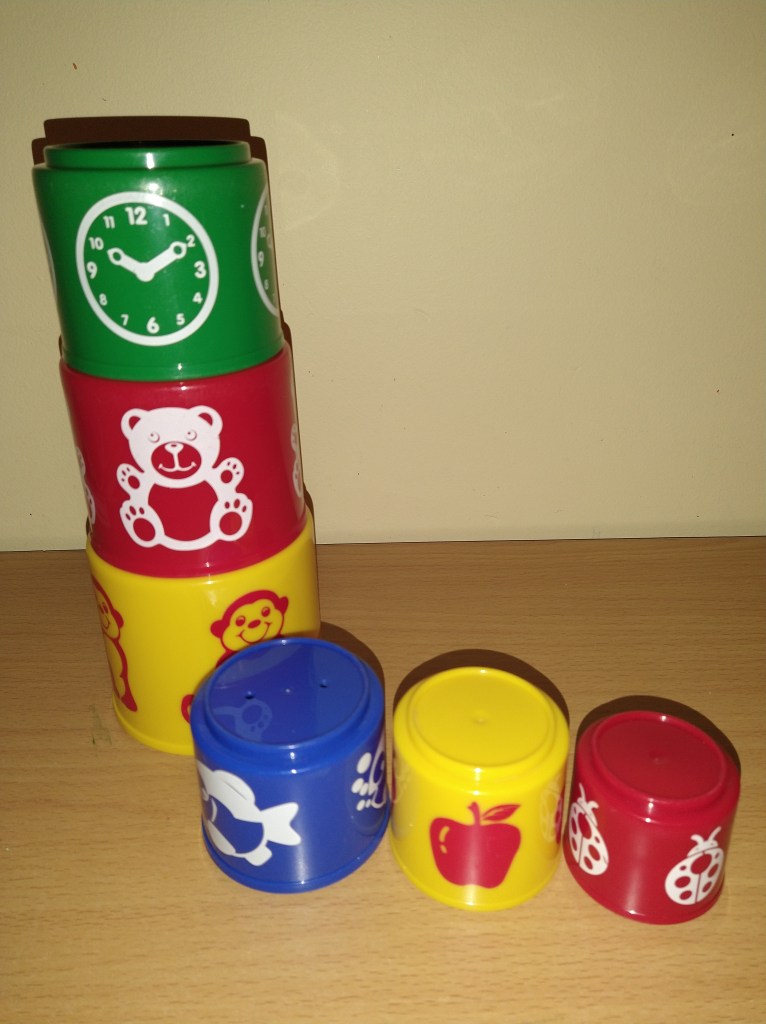
Stacking Cups

Stacking cups can be used to work on some of the following skills:

  • Vocabulary Development. Model the concepts: ‘on, in/out, up/down’.
  • Requesting. Encourage your child to request ‘more’ or ‘help’ by using gestures, sounds or word approximations.
  • Turn- taking skills. Take turns stacking the cups. Turn-taking is a vital skill in conversation development and one that can be taught across a range of toddler toys.
  • Symbolic Play Skills. Engage in some silly play with your toddler. Use a cup as a pretend hat or pretend to take a drink. Lay the foundations for their imaginative thinking.
  • Problem Solving Skills. Your child is working hard during this activity, trying to figure out which cups stack on top of each other. Another idea is to hide some chocolate buttons under a cup and encourage them to find it.

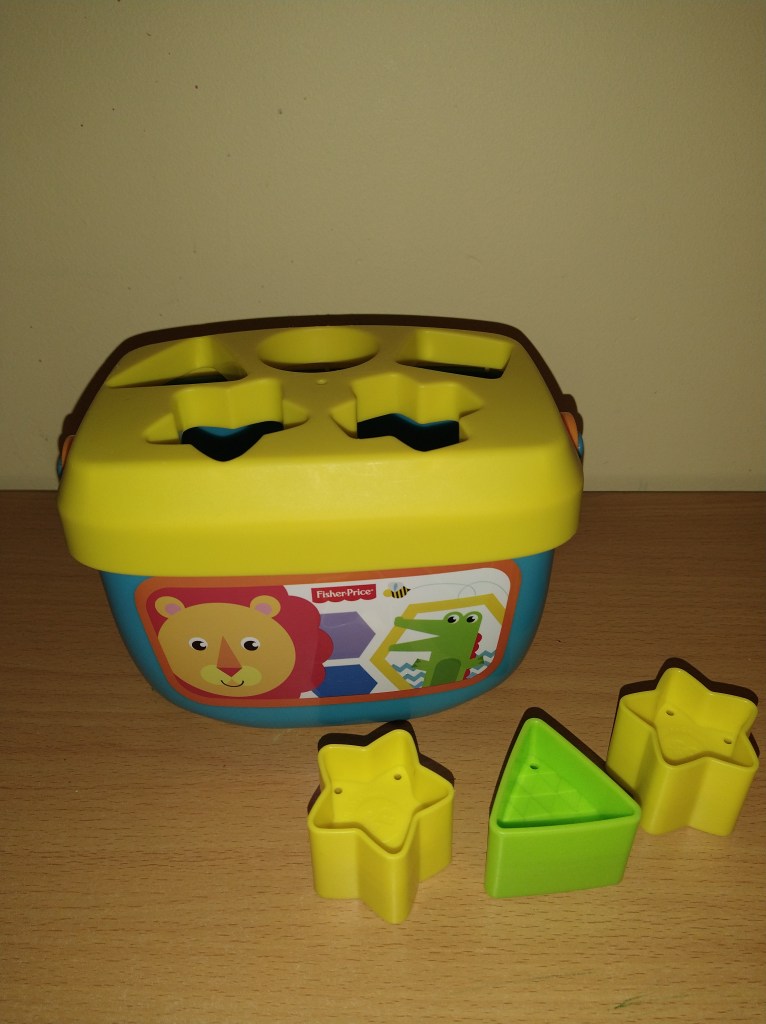
Shape sorter

Shape sorters can be used to work on the following skills:

  • Hand/eye coordination
  • Motor skills
  • Problem Solving
  • Turn-taking
  • Requesting ‘help’
  • Developing your child’s understanding of shapes can help with literacy development later on.

Bubbles

Bubbles are another great recommendation and can be used to target the following:

  • Eye Contact. Blowing bubbles can encourage lots of eye contact as your child anticipates more. Wait for your child to make eye contact before blowing again.
  • Cause and effect. Children begin to learn that their actions caused the desired event through cause and effect toys and activities. This paves the way for higher level problem solving and reasoning skills. Children will enjoy using their fingers and hands to pop the bubbles!
  • Early speech sound development. Stimulate early sounds such as [p] as you pop the bubbles.
  • Automatic speech: Ready, steady, go. Wait for your child to attempt the word ‘go’ before blowing the next bubble.
  • Requesting. Encourage your child to request ‘more’ bubbles. Tie the bubbles tightly and encourage your child to say ‘open’ or ‘help’.

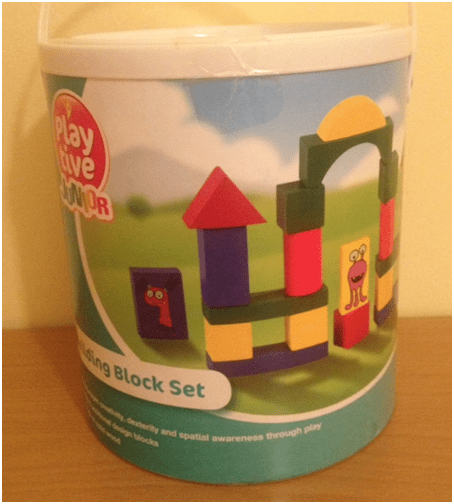
Building Blocks

Building blocks can be used to target the following skills:

  • Hand-eye coordination
  • Fine/ gross motor skills
  • Constructive play (the use of materials to create or build something)
  • Cause & effect (e.g. knocking over a tower)
  • Creativity and imagination
  • Problem Solving
  • Concepts: on, off, in, out, up.
  • Social skills: turn-taking, cooperating with others.
  • Colours, Shapes & Sizes
  • Counting

For lots more toy recommendations, visit my Instagram page @jumpstartspeechtherapy